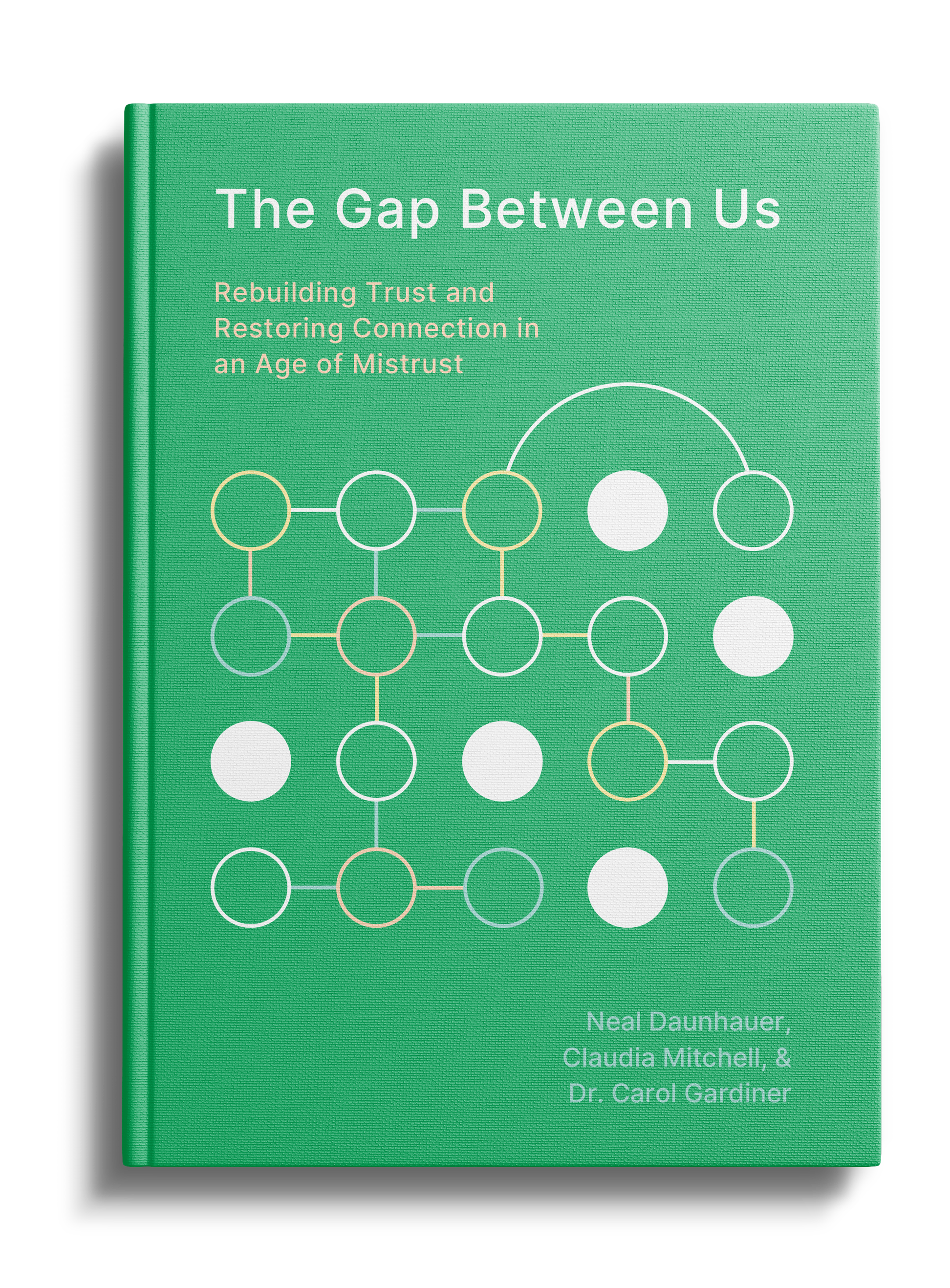
The Gap Between Us
Why relationships break down, and how we rebuild trust.
We're more connected than ever, yet many of us have never felt further apart. This book helps you identify what's driving the gap and begin rebuilding trust.

The moment before you react…
is where trust is either built or broken.
Why This
Book Matters
We’re living in a time where:
Conversations turn into conflict
Differences feel like threats
And trust, once assumed, is now questioned
But the real divide isn’t just out there.
It shows up in our homes.
In our workplaces.
In the relationships we care about most.
The Gap Between Us exists because of small, repeated moments. Misunderstandings, assumptions, reactions that go unexamined.
This book gives you the tools to:
Name what you're feeling
Understand what's driving your reactions
And choose a better response before the gap widens
Because rebuilding trust doesn’t start with fixing others.
It starts with understanding yourself
About the Authors

We come from different worlds: a counselor, an educator, and a business leader.
But we’ve spent decades seeing the same thing:
Broken trust is everywhere.
And most people don’t know how to repair it.
Through thousands of conversations with students, leaders, clients, and people trying to navigate life's relationship gaps, we've seen the same pattern:
People don’t just need better communication.
They need to understand what they’re feeling and why they react the way they do.
This book is the result of that work and a shared belief that trust can be rebuilt, one relationship at a time.
Neal Daunhauer
Drawing on decades of business leadership, marketing, and organizational change experience, Neal helped translate complex emotional concepts into relatable stories and practical tools. He developed the "I"s of Mistrust framework, helping readers identify what's driving their reactions and relationship gaps.
Carol Gardiner
As a lifelong educator, Carol brings a deep understanding of emotional intelligence, human development, and how people learn and grow. Her research and insight helped shape the book's practical framework for applying emotional intelligence to real-life relationships.
Claudia Mitchell
As a counselor, Claudia brings a unique ability to understand how people think, feel, and respond under stress. Her experience with cognitive behavioral therapy, emotional healing, and metaphorical storytelling helped shape the book's approach to self-awareness, personal growth, and trust recovery.
What you’ll learn

Name What You’re Feeling
Most conflict isn’t about what’s happening. It’s about what’s underneath it.
You’ll learn to identify the emotional triggers driving your reactions using the “I”s of Mistrust.

Understand Your Patterns
Recognize the emotional patterns, assumptions, and habits that shape your relationships and widen the gap.

Choose a Better Response
You can’t control others, but you can control what comes next.
You’ll learn how to pause, reframe, and respond in a way that builds trust instead of breaking it.
The Gap Between Us Framework
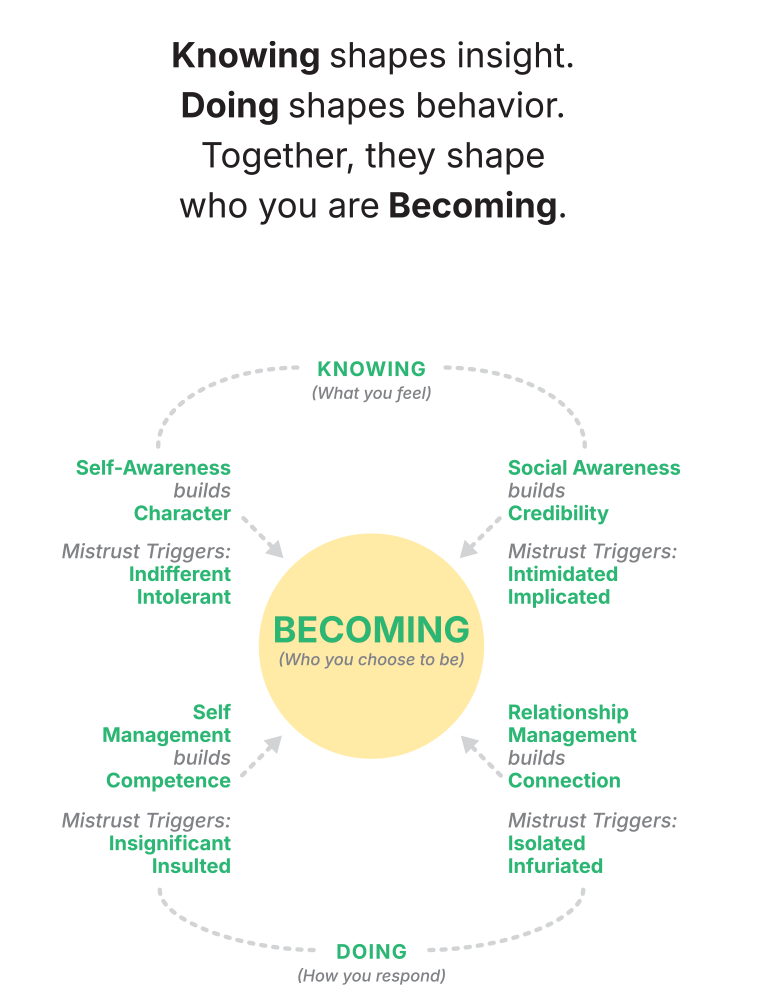
Every relationship gap begins with what we feel. The challenge is that most of us react before we understand what's driving us.
The Gap Framework helps connect knowing and doing through the lens of emotional intelligence.
Knowing starts with self-awareness and social awareness. By identifying the emotions, assumptions, and mistrust triggers shaping your perspective, you gain insight into what is really driving your reactions.
Doing requires self-management and relationship management. As you learn to pause, regulate your responses, communicate more effectively, and extend empathy, trust begins to grow.
Together, these skills strengthen the four foundations of trust: Character, Credibility, Competence, and Connection.
A Note From Us
If you’re here, chances are you’ve felt it.
The distance.
The frustration.
The growing gap in a relationship that matters.
We’ve felt it too.
In our work and in our own lives, we’ve seen how quickly small misunderstandings grow into lasting divides. And how easy it is to believe the problem is always someone else.
But what changed everything for us was this realization:
We all have a role to play in the gap.
Not all the blame. But a role.
This book isn't about fixing the world overnight. It's about understanding what's driving your reactions so you can show up differently in the moments that matter most.
Because trust isn’t rebuilt through big gestures.
It's rebuilt through small, intentional choices, one relationship at a time.
We’re glad you’re here.
Let's start closing the gap together.

Frequently Asked Questions
-
It’s the emotional distance that forms between people when misunderstandings, assumptions, and mistrust go unchecked, widening the gap between us.
-
They are eight core emotional responses, like feeling insulted, isolated, or insignificant, that help identify what’s driving our reactions when trust is strained.
-
This book helps you identify the emotions driving mistrust, understand your role in relationship gaps, and choose responses that rebuild trust. Instead of focusing on changing others, it starts with understanding yourself.
-
No. Real change begins when you stop waiting for others to change and take ownership of your own responses. While rebuilding trust often requires participation from both sides, your greatest influence is over how you choose to respond.
-
No. While mistrust affects politics, institutions, and society, this book focuses on personal relationships and the role we play in building or repairing trust.
-
Yes, but not instantly. Trust is rebuilt through small, consistent, intentional choices made over time.
-
Start with one relationship. Name what you're feeling and what's driving your reactions. Awareness is the first step toward rebuilding trust.